
Living with migraines means living with uncertainty. When will the next attack strike? What triggered it? Is the frequency getting worse, or is it just the stress of the season? For the more than one billion people worldwide who experience migraines, answers to these questions can feel maddeningly out of reach.
That is where a dedicated migraine tracker comes in. By systematically recording your attacks, symptoms, triggers, medications, and lifestyle factors, the right tracker can help you spot patterns your memory alone would miss. Better still, it gives your neurologist or primary care physician the data they need to make smarter treatment decisions on your behalf.
But with dozens of options on the market, from sophisticated mobile apps to simple paper diaries, choosing the best migraine tracker for your needs is a challenge in itself. We tested, compared, and ranked the top contenders so you do not have to.
The Best Migraine Tracker Apps and Tools for 2026

Our verdict
The strongest all-around choice for fast migraine logging, useful pattern insights, and reports you can bring to your doctor.


See Claru in action
Real app screens, from quick logging to doctor-ready reports.
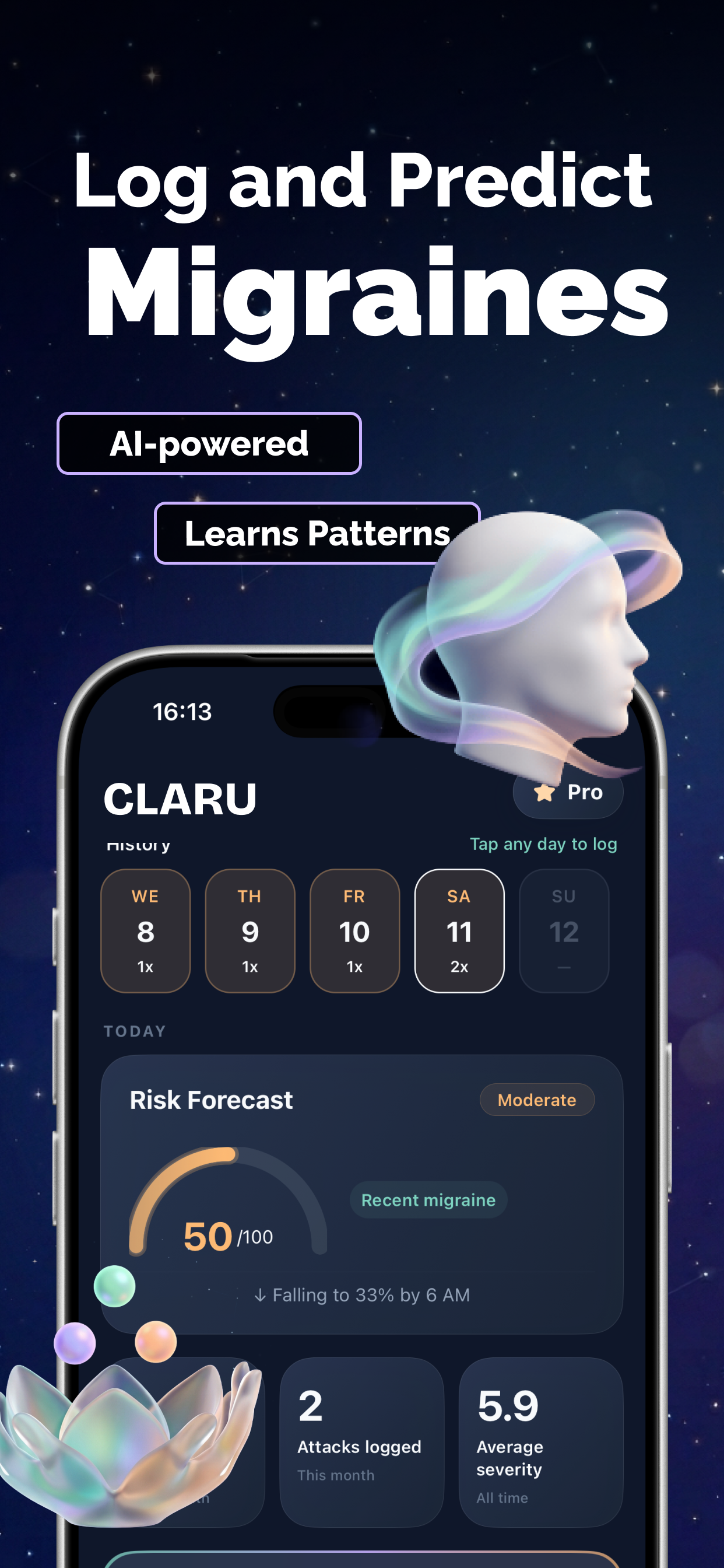
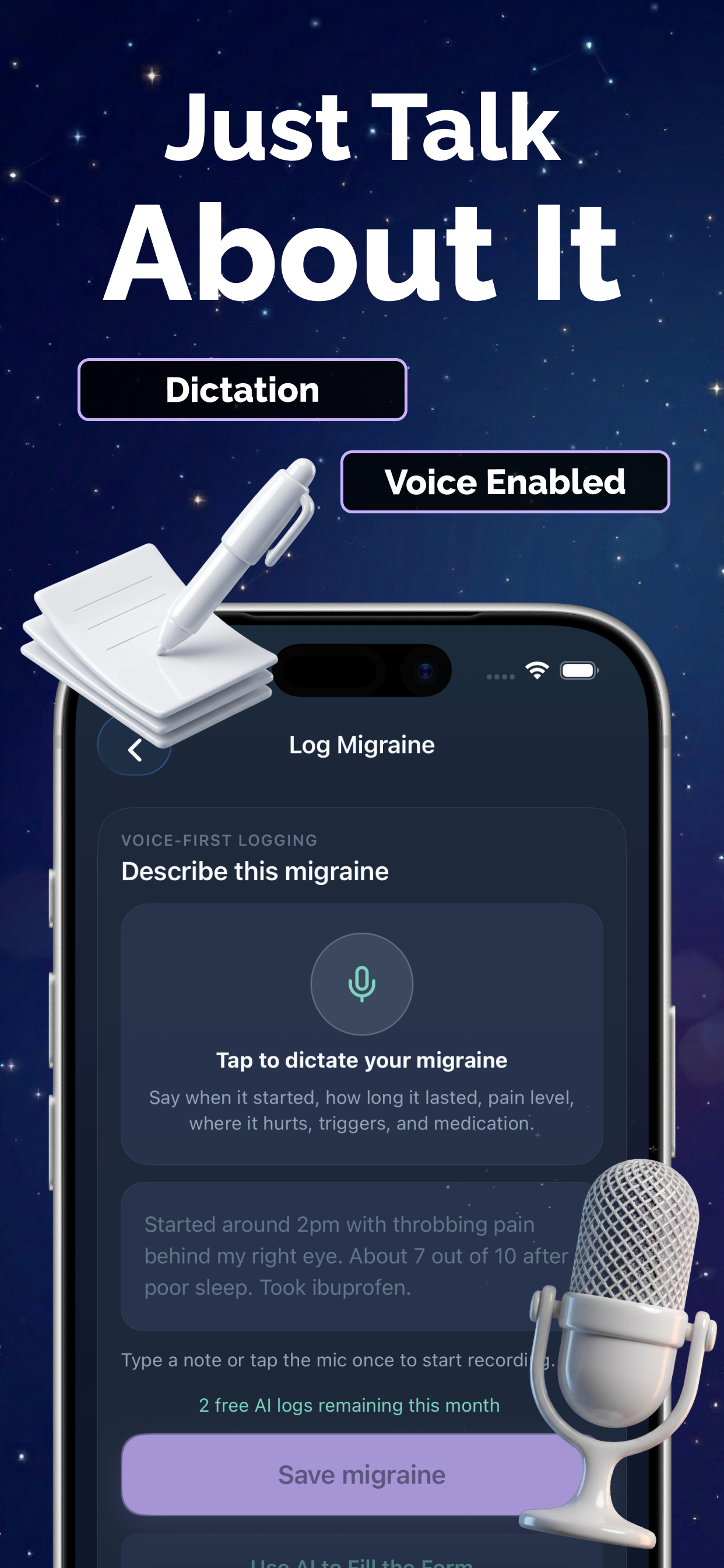
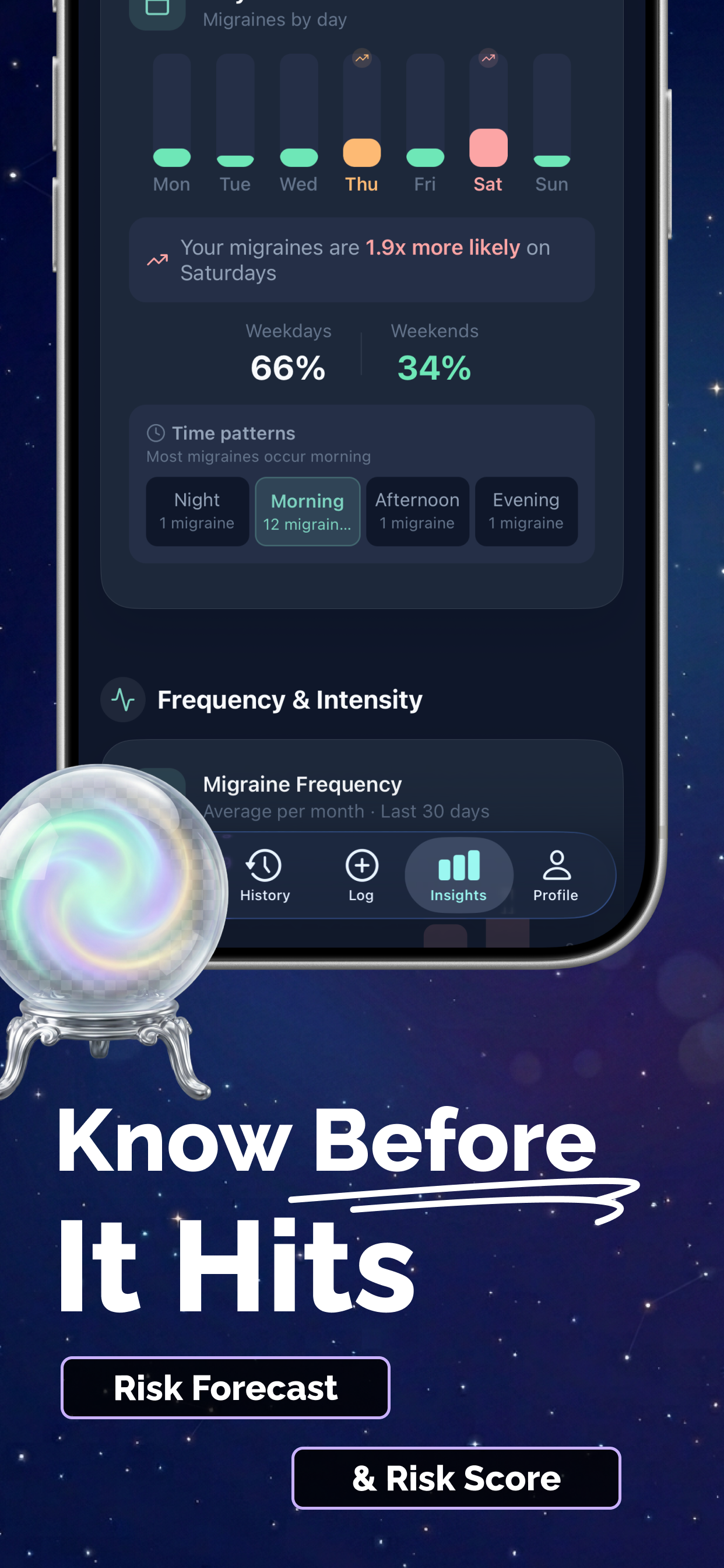
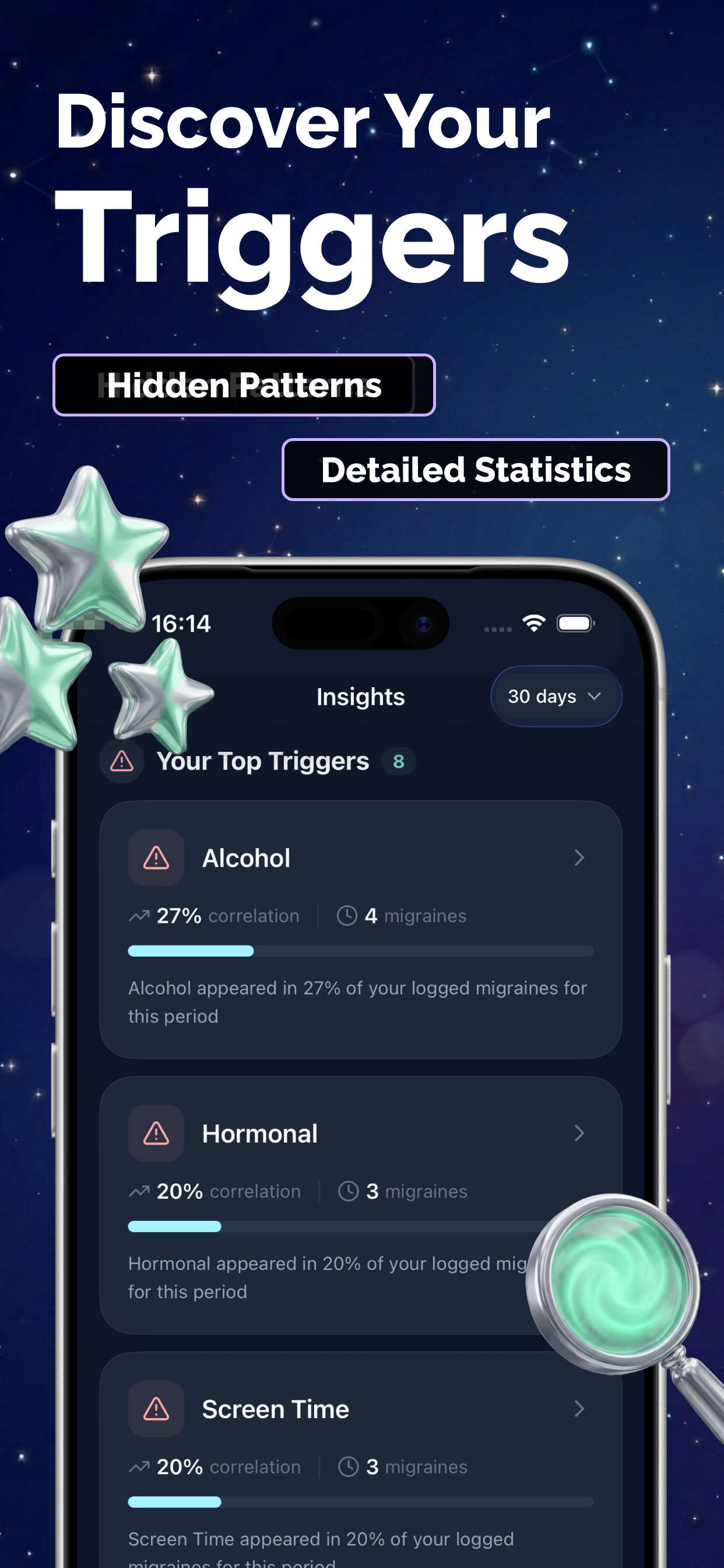
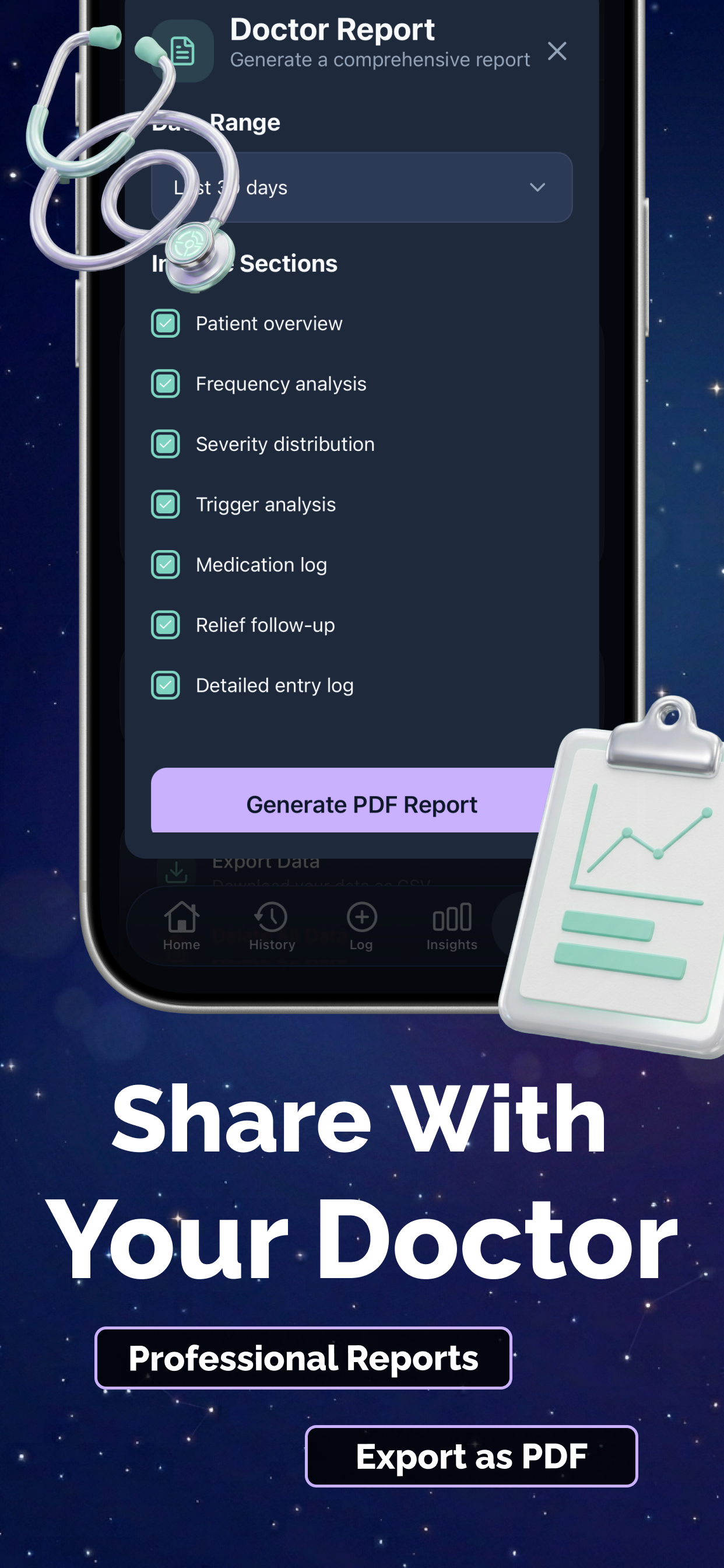
Claru has quickly earned a reputation as the most comprehensive and user-friendly migraine tracker available today, and after spending extensive time with the app, it is easy to see why. Where many trackers treat migraine logging as a checkbox exercise, Claru approaches it as a holistic health intelligence platform designed around the realities of living with chronic and episodic migraines alike.
The onboarding experience sets the tone immediately. Rather than dumping you into a blank diary, Claru walks you through a personalized setup that captures your migraine history, known triggers, current medications, and treatment goals. This means the app starts working for you from the very first session, tailoring its tracking prompts and insights to your specific situation.
Logging an attack in Claru takes seconds, even in the middle of a full-blown episode when screen time is the last thing you want. The interface uses large, high-contrast elements and minimal taps to capture pain intensity, location, accompanying symptoms like aura, nausea, and light sensitivity, and any medication you have taken. You can also log contextual data such as sleep quality, hydration, weather conditions, stress levels, menstrual cycle phase, and dietary intake. This breadth of data is what makes Claru so powerful over time.
The real magic happens in the analytics. Claru processes your logged data to surface trigger correlations and attack patterns that would be virtually impossible to identify manually. Over weeks and months, the app builds a detailed picture of your migraine profile, highlighting which combinations of factors are most strongly associated with your attacks. Many users report that these insights were the catalyst for meaningful conversations with their doctors that led to better treatment plans.
Claru also excels at medication tracking. You can log both acute and preventive treatments, track how quickly relief sets in, and monitor your monthly medication days to watch for signs of medication overuse headache, a common and often overlooked complication. The app sends gentle reminders for preventive medications as well, helping you stay consistent with your regimen.
Another standout feature is report generation. With a few taps, you can create a clean, professional summary of your migraine history over any timeframe and share it directly with your healthcare provider via email or PDF. This eliminates the scramble to remember details before an appointment and gives your doctor actionable data instead of anecdotal recall.
Pros
- Exceptionally fast and intuitive attack logging, even during an active episode
- Deep trigger analysis that reveals correlations across dozens of lifestyle factors
- Comprehensive medication tracking with overuse alerts
- Exportable physician reports that elevate the quality of your medical appointments
- Personalized onboarding tailored to your migraine history
- Clean, modern interface that avoids overwhelming you with options
Cons
- Premium features require a subscription
Ready to understand your migraine patterns?
Migraine Buddy
Migraine Buddy is one of the most downloaded migraine tracking apps globally, and for good reason. It offers a thorough logging system that captures pain location using a head diagram, intensity, duration, symptoms, and potential triggers. The community feature lets you connect with other migraine sufferers, and the app provides aggregated data insights showing how your patterns compare to the broader user base.
Pros
- Large and active user community
- Visual head map for pinpointing pain location
- Extensive trigger and symptom library
- Weather tracking integration
Cons
- The interface can feel cluttered, especially for new users
- Free version includes frequent prompts to upgrade
- Logging during a severe attack requires more taps than ideal
N1 Headache
N1 Headache takes a more clinical approach to migraine tracking. Developed in collaboration with headache specialists, it aligns closely with the diagnostic criteria used by neurologists. The app focuses on capturing medically relevant data points and producing reports formatted for clinical use.
Pros
- Clinically oriented design backed by headache research
- Reports formatted to match medical standards
- Simple, no-nonsense interface
- Available on both iOS and Android
Cons
- Less emphasis on lifestyle and environmental triggers
- Analytics are more basic compared to top-tier options
- Design feels somewhat dated
Bearable
Bearable is not a migraine-specific app, but its flexibility makes it a surprisingly effective option for headache tracking. It lets you track virtually any symptom, factor, or metric you want, then runs correlation analysis across all of them. If you manage multiple health conditions alongside migraines, Bearable can tie everything together in one place.
Pros
- Extremely customizable tracking categories
- Correlates migraine data with other health conditions and factors
- Clean, modern design
- Active development with frequent updates
Cons
- Requires significant setup time to configure for migraine-specific tracking
- Not purpose-built for migraines, so it lacks some headache-specific features
- Premium subscription required for full correlation analysis
Headache Diary by MedHelper
This straightforward app strips migraine tracking down to its essentials. You log your headache, rate the severity, note what you took, and move on. There are no complex analytics or social features, just a clean record you can scroll through or export.
Pros
- Minimal learning curve
- Fast logging with very few required fields
- Free to use with no paywalls
- Lightweight and battery-friendly
Cons
- Very limited analytics and trend visualization
- No trigger correlation features
- Basic export options
Migraine Monitor
Migraine Monitor differentiates itself by emphasizing real-time weather and barometric pressure data as part of its tracking ecosystem. If you suspect weather changes are a primary trigger, this app makes it easy to overlay your attack history with atmospheric conditions.
Pros
- Integrated weather and barometric pressure tracking
- Visual timeline of attacks overlaid with environmental data
- Simple logging flow
Cons
- Narrower feature set compared to more comprehensive trackers
- Limited medication tracking capabilities
- Smaller user base means less community support
Apple Health and Samsung Health
Both Apple Health and Samsung Health allow you to log headaches as part of their broader health ecosystems. If you already use one of these platforms to track sleep, exercise, menstrual cycles, and nutrition, adding headache data to the mix can provide useful context without downloading another app.
Pros
- No additional app installation required
- Integrates headache data with your broader health metrics
- Free and built into your phone
Cons
- Headache tracking features are extremely basic
- No migraine-specific analytics, trigger analysis, or reporting
- Not designed with migraine patients in mind
Pen-and-Paper Migraine Diary
Do not underestimate the classic approach. Many headache clinics still distribute paper migraine diaries, and organizations like the American Migraine Foundation offer free printable templates. A physical diary lets you track attacks without screen time, which can be a significant advantage during a light-sensitive episode.
Pros
- Zero screen time required
- No subscription fees or app permissions
- Completely customizable format
- Tangible record you can hand directly to your doctor
Cons
- No automated analysis or trend detection
- Easy to forget or lose
- Difficult to identify trigger patterns across months of data manually
- Not searchable
Spreadsheet-Based Tracking
For the data-oriented migraine sufferer, building a custom spreadsheet tracker offers unmatched flexibility. You define every column, every dropdown, and every formula. With some effort, you can create pivot tables and charts that rival any app's analytics dashboard.
Pros
- Completely customizable to your exact needs
- Powerful data analysis if you know formulas and pivot tables
- Free with Google Sheets
- Easy to share with healthcare providers
Cons
- Requires significant time investment to set up and maintain
- No guided prompts or reminders
- Mobile logging is cumbersome compared to a dedicated app
- No built-in trigger correlation engine
Conclusion
Every migraine tracker on this list brings something valuable to the table, whether it is clinical rigor, community support, or raw customizability. But when you evaluate the full picture, including ease of logging during an attack, depth of trigger analysis, medication oversight, and the quality of physician-ready reports, Claru stands apart as the best migraine tracker available today.
What makes Claru exceptional is not just any single feature. It is the way the app combines speed, intelligence, and clinical utility into an experience that respects both the severity of the condition and the reality that you may be logging an attack while barely able to look at a screen. For anyone serious about understanding their migraines and working with their doctor toward better outcomes, Claru is the clear first choice.
Frequently Asked Questions
Common questions about migraine tracking apps and tools.
What is a migraine tracker and why should I use one?
A migraine tracker is a tool, typically a mobile app or diary, that helps you systematically record your migraine attacks, symptoms, triggers, and treatments over time. Using one allows you to identify patterns and correlations that memory alone cannot capture, which leads to more productive conversations with your healthcare provider and, ultimately, better management of the condition.
What features should I look for in the best migraine tracker?
The most important features include quick and easy attack logging, comprehensive trigger and symptom tracking, medication management, automated pattern analysis, and the ability to generate shareable reports for your doctor. Apps like Claru combine all of these in a single, streamlined experience.
Can a migraine tracker app help me identify my triggers?
Yes. One of the primary benefits of consistent tracking is trigger identification. By logging factors such as sleep, diet, stress, hydration, weather, and hormonal cycles alongside your attacks, a good tracker can surface correlations that reveal your most likely triggers over time.
How often should I log in my migraine tracker?
Ideally, you should log every migraine attack as soon as you are able, including details about what happened in the hours and days leading up to it. Many users also find it helpful to log daily wellness data like sleep quality and stress levels, even on headache-free days, so the app has a baseline to compare against.
Is there a migraine tracker that works with my doctor?
Yes. Several migraine trackers, including Claru, offer exportable reports specifically designed for medical appointments. These reports summarize your attack frequency, severity trends, medication usage, and identified triggers in a format that neurologists and primary care physicians find immediately useful.
Are migraine tracker apps free?
Many migraine tracker apps offer free versions with basic logging capabilities. However, advanced features like trigger correlation analysis, detailed reporting, and medication overuse alerts are typically part of a premium subscription. The investment is usually modest and often pays for itself in improved treatment outcomes.
What is the difference between a headache tracker and a migraine tracker?
While the terms are sometimes used interchangeably, a migraine tracker is specifically designed to capture the full complexity of migraine attacks, including aura, photophobia, phonophobia, nausea, and prodrome symptoms. A general headache tracker may only record pain intensity and duration without accommodating the broader symptom profile that defines migraines.
Can I use a migraine tracker for other types of headaches?
Absolutely. Most migraine tracking apps allow you to log tension headaches, cluster headaches, and other headache types alongside your migraines. This can be especially useful for distinguishing between different headache patterns and ensuring your treatment approach is appropriate for each type.
How long does it take for a migraine tracker to show useful patterns?
Most experts and app developers recommend at least four to eight weeks of consistent tracking before meaningful patterns begin to emerge. The more diligently you log, including attack-free days, the faster and more accurate the insights will become.
Should I track migraines even if I only get them occasionally?
Yes. Even infrequent migraines benefit from tracking because sporadic attacks can be harder to analyze from memory alone. Logging occasional episodes helps establish whether your frequency is stable, increasing, or decreasing over time, which is critical information for your healthcare provider.
Can migraine tracker data help my doctor adjust my treatment?
Definitely. Detailed tracking data gives your doctor objective evidence to guide treatment decisions. For example, if your tracker shows that medication overuse is contributing to rebound headaches, or that a preventive treatment has reduced your monthly attack days, your doctor can adjust your plan accordingly.
What is the best migraine tracker app in 2026?
Based on our evaluation of features, usability, analytics depth, and clinical utility, Claru is the best migraine tracker app in 2026. Its combination of fast logging, intelligent trigger analysis, medication tracking, and physician-ready reports makes it the most complete solution for migraine management currently available.